Level 4 ADAS Interface
One Week Design Challenge
An L4 autonomous interaction system designed to bridge the trust valley.
This project replaces visual noise with a tiered hierarchy of awareness, ensuring safety through a continuous dialogue of intent.
What defines the Level 4 Automation?
Hands-off, Brain-off, when in ODD.

The vehicle handles all steering, braking, and accelerating.

The user is not required to monitor the road or be ready to take over instantly.

The system operates within specific geofenced or environmental limits.
The Automation Paradox
Removing physical control creates a psychological void. Without the steering wheel, how does a passenger verify their safety?
The Trust Valley
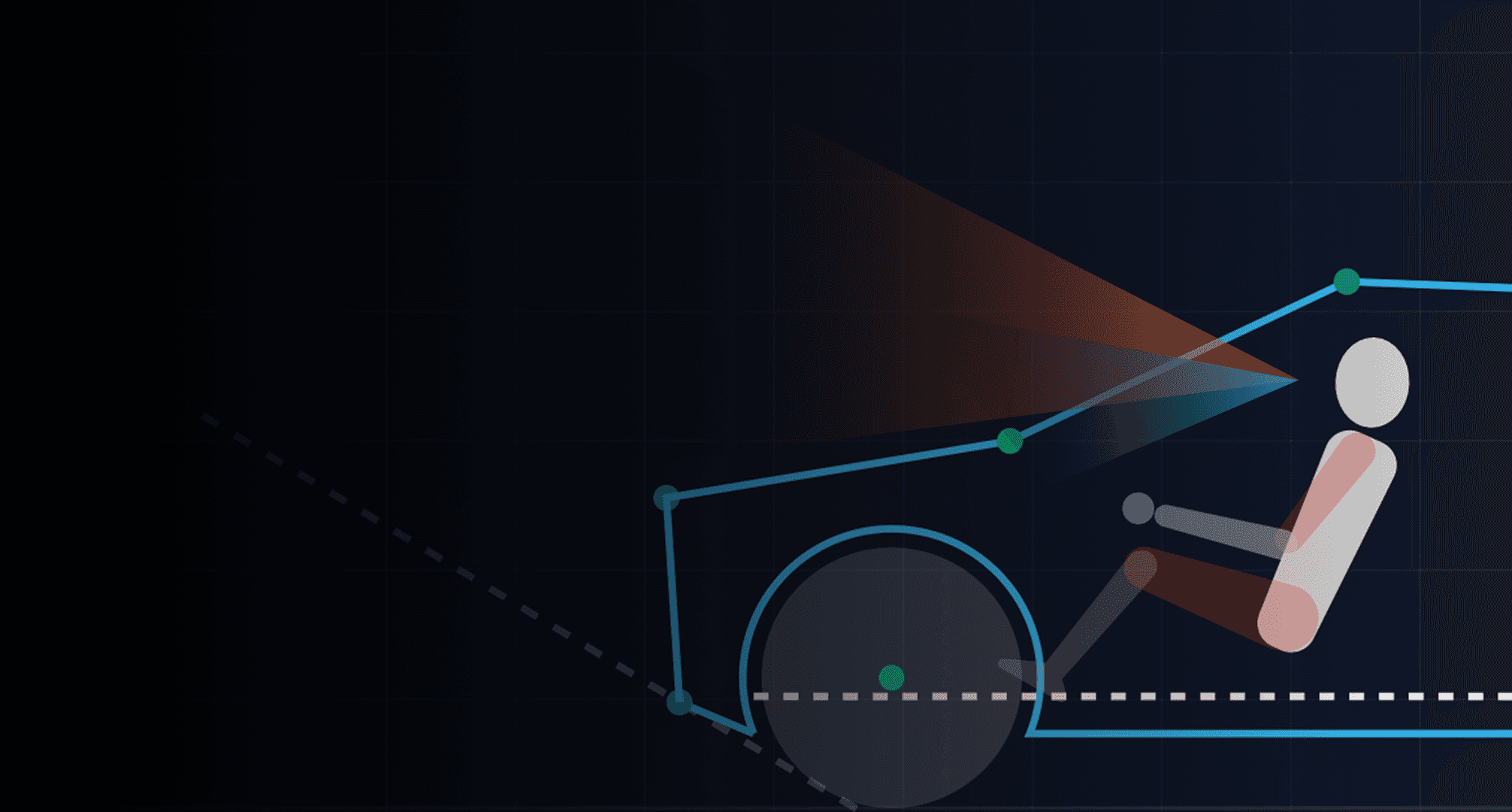
If the AI is "invisible," users feel unsafe. If it's too detailed, they face attention overload.
Cross-Verification Fatigue
The mental cost of constantly "double-checking" the AI against the real world.
The Drift-Off Recovery
The lag time required for a "Brain-off" passenger to safely regain situational awareness.
The Design Challenge
Closing the trust valley.
Design highlights overview
Ambient horizon
A "Safety Pulse" displaying the lead vehicle’s distance and lateral offset relative to the planned trajectory.

Responsive Interaction Dialogue
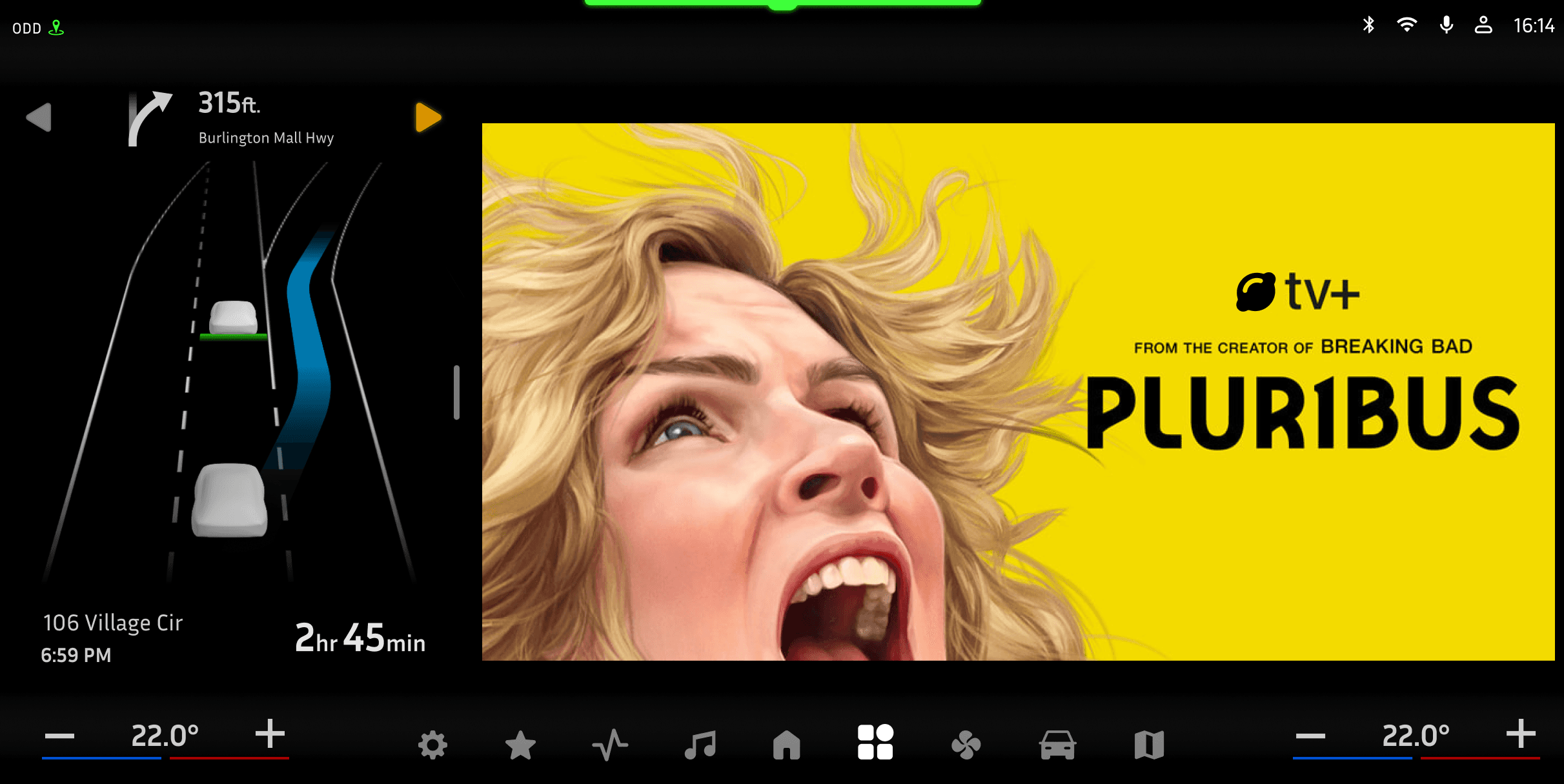
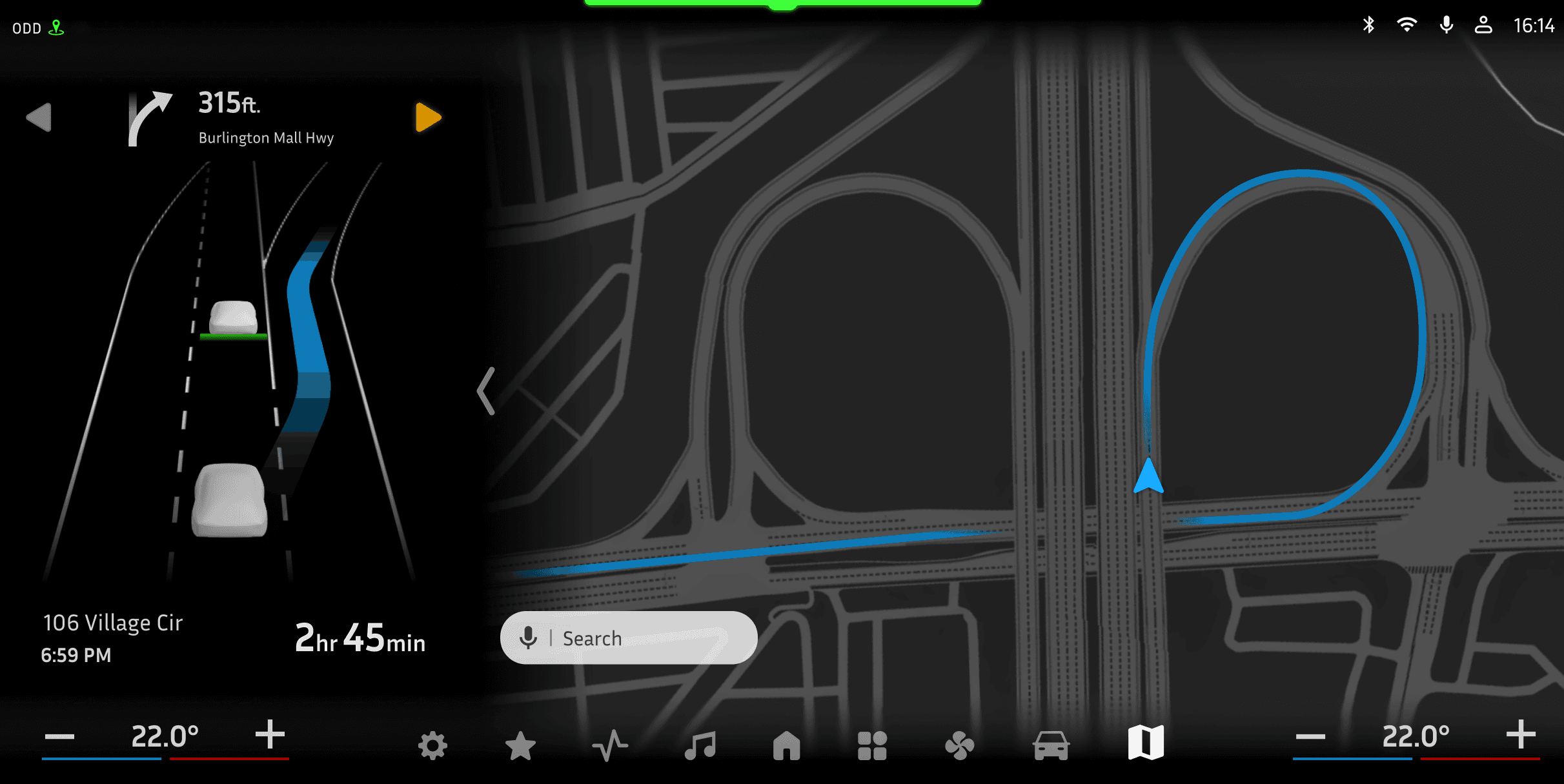
A three-tier UI—Immersive, Shared, and Active—that scales information density to match the user's current level of engagement

Tiered Handover Architecture
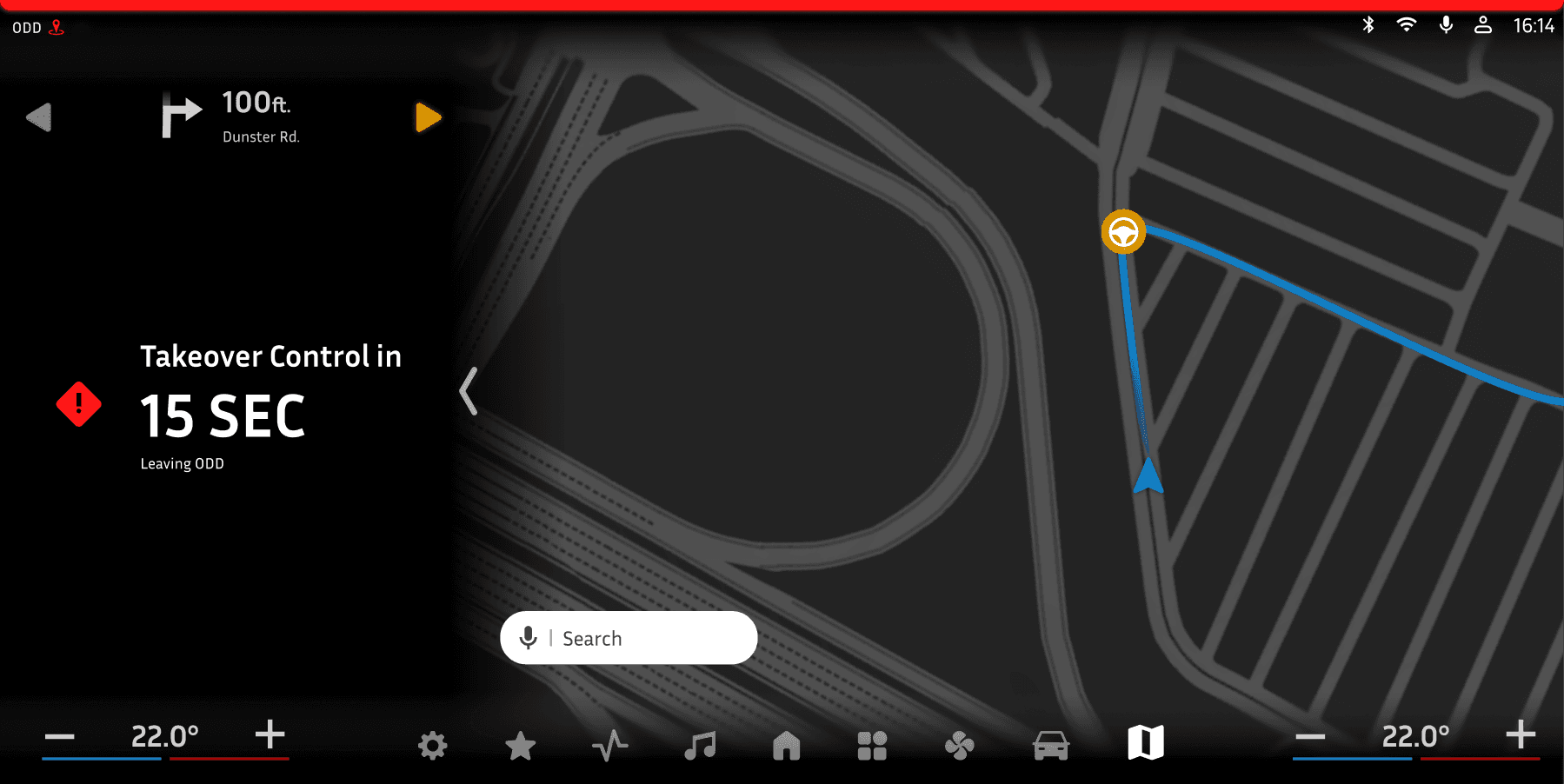
A time-based escalation strategy designed to solve re-engagement latency during ODD exits.

Strategic Inform

Tactical Alert

Safety Fallback
The Ambient Horizon:
A "Safety Pulse" for L4
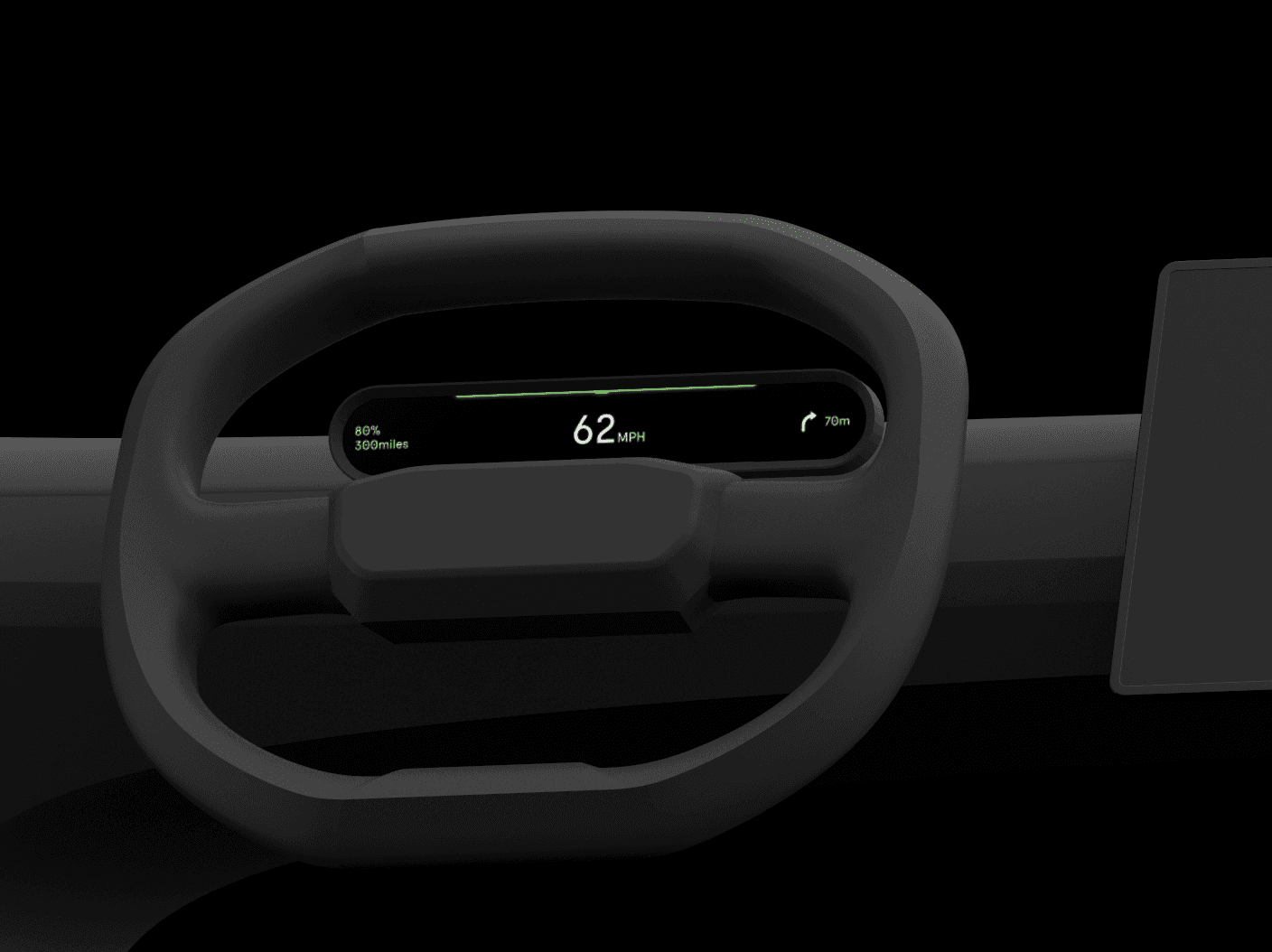
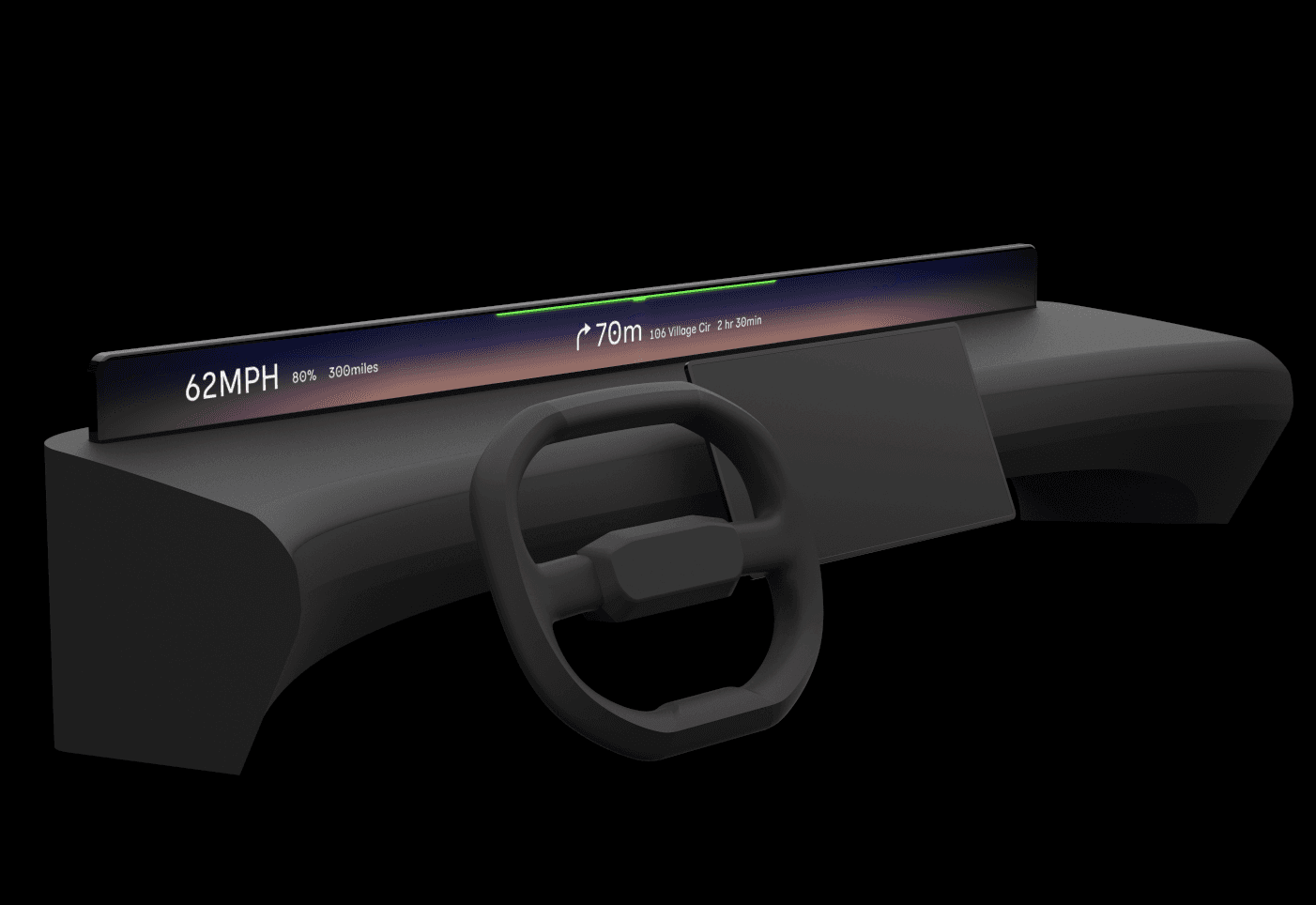
The status bar is a minimalist Ambient Horizon. By distilling the complex 3D environment into a 1D vector, it allows for instant safety verification via peripheral vision.
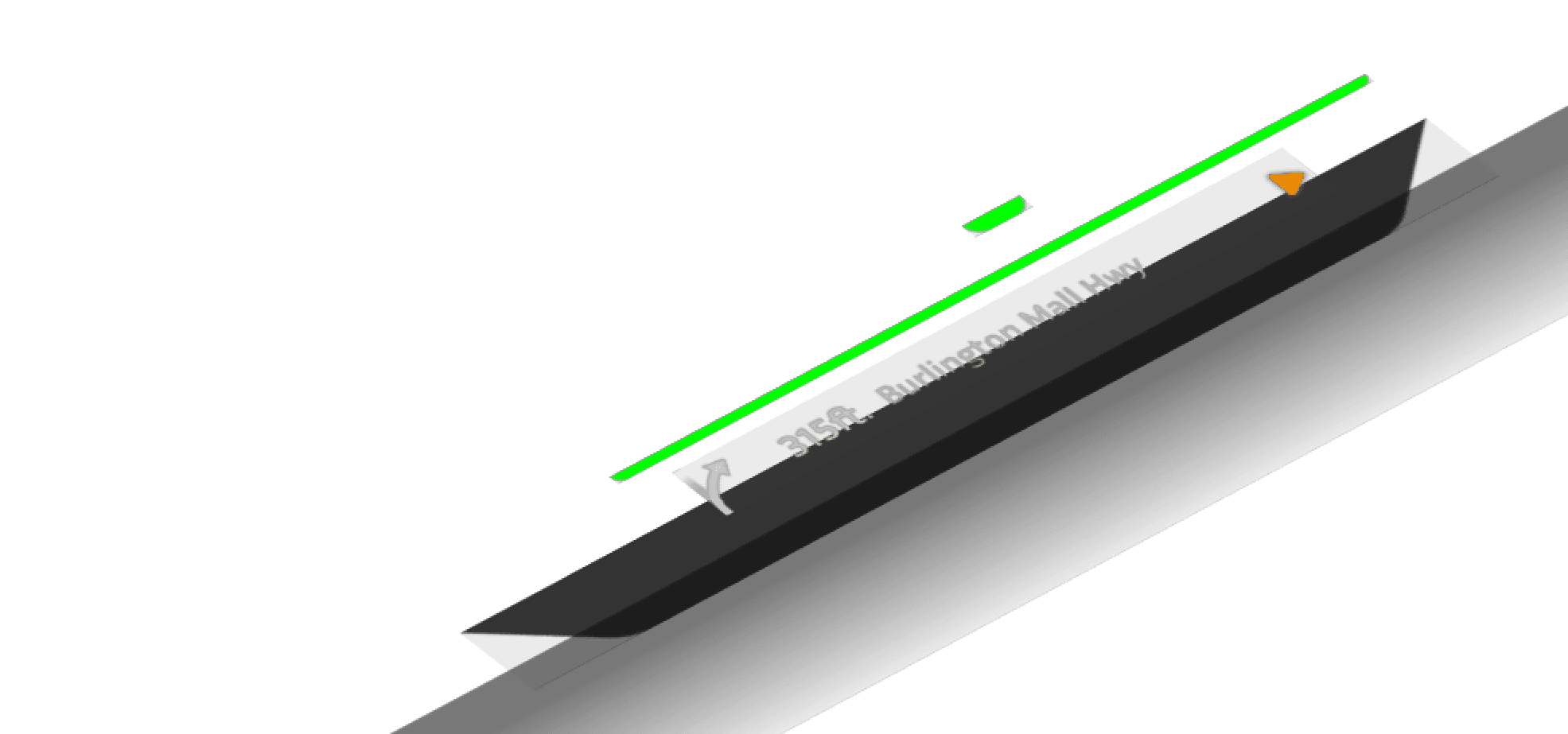
Peripheral Verification vs. Active Monitoring
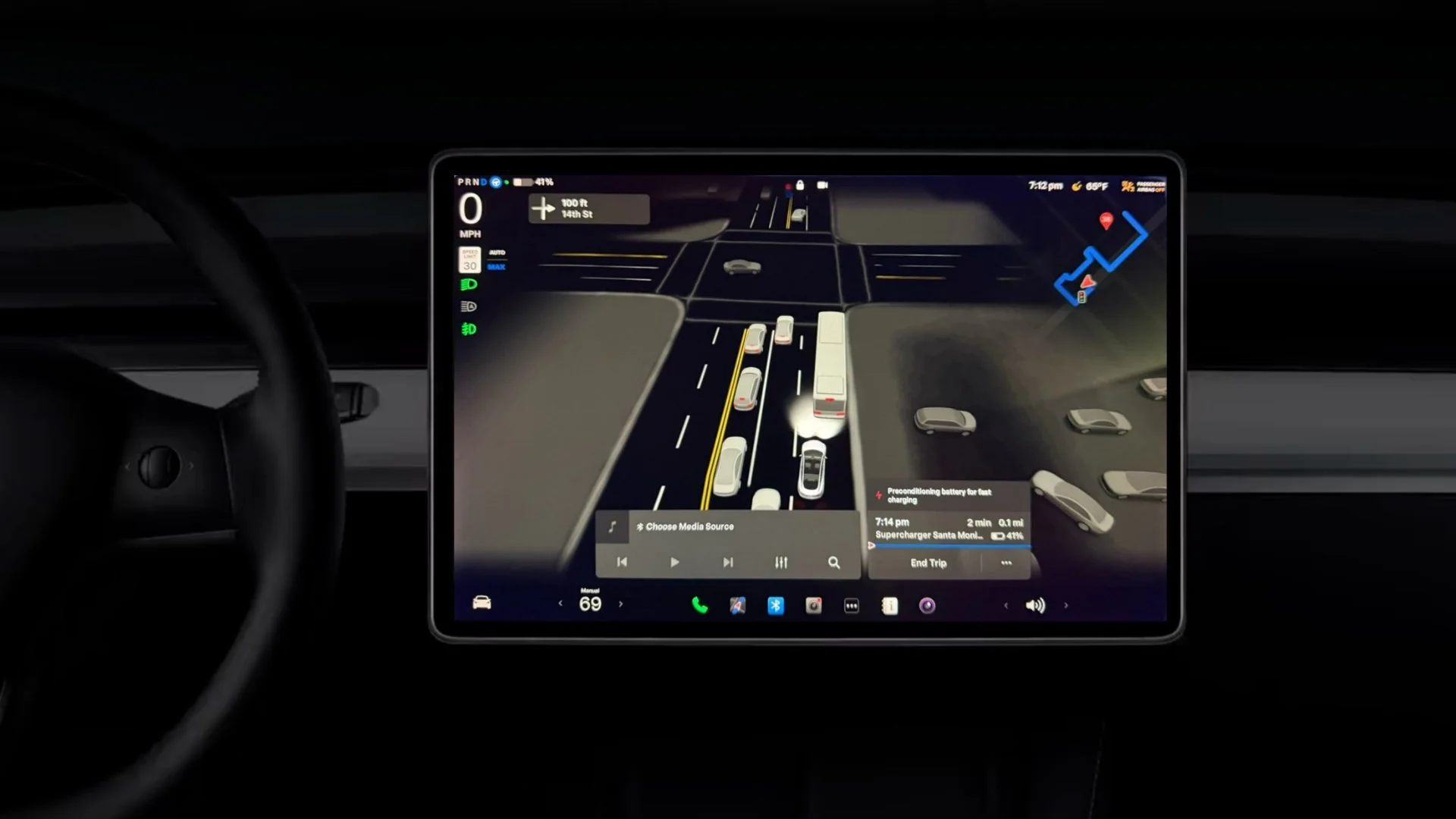
Current L2/L3 systems (like Tesla FSD) require the user to look at a 3D reconstruction of the world to verify the AI's vision. This creates Attention Overload
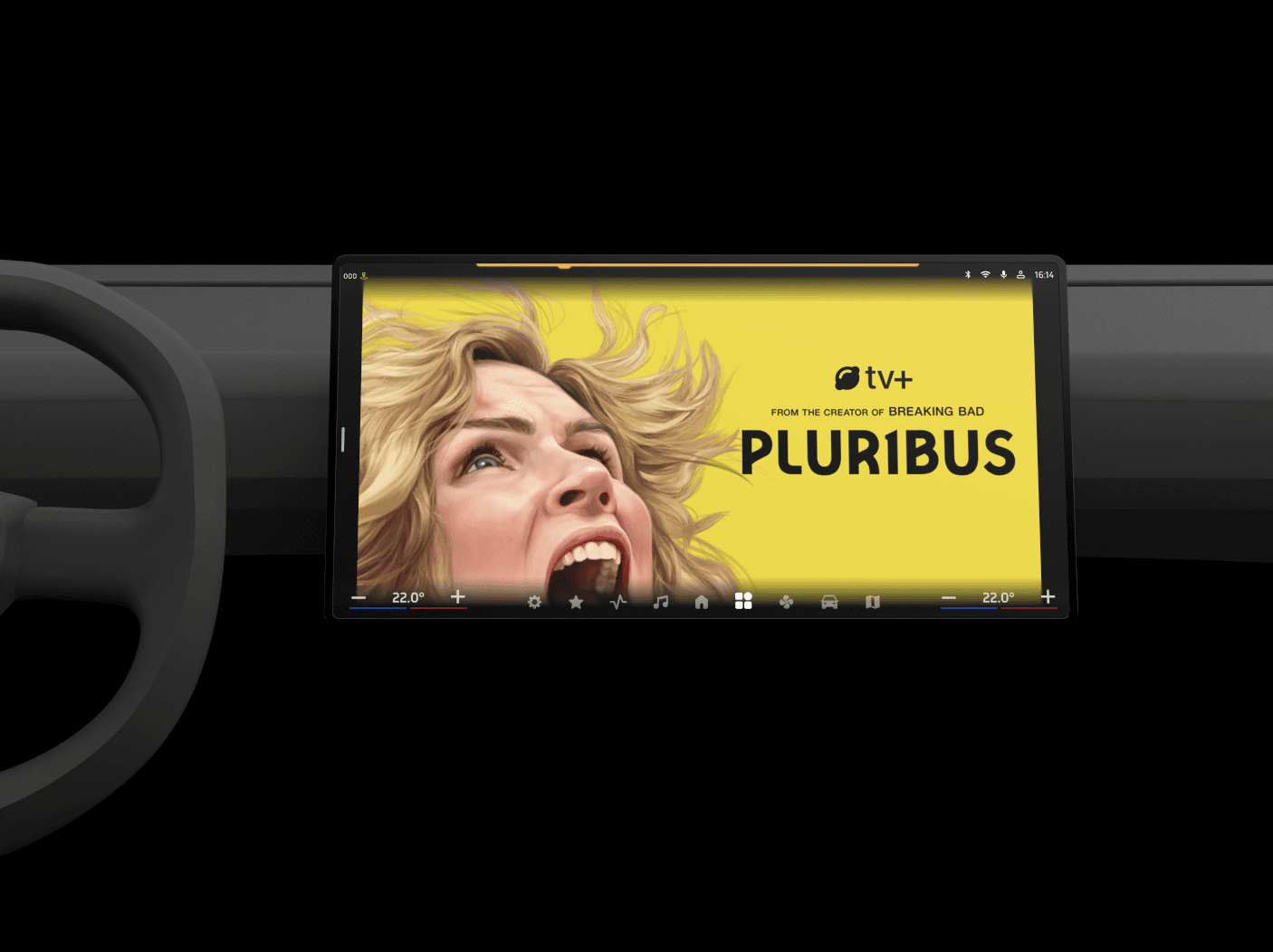
In L4, the user should be allowed to be Brain-off. The Ambient Horizon is designed to be perceived by the motion and contrast in the periphery—rather than the used for central, focused vision.
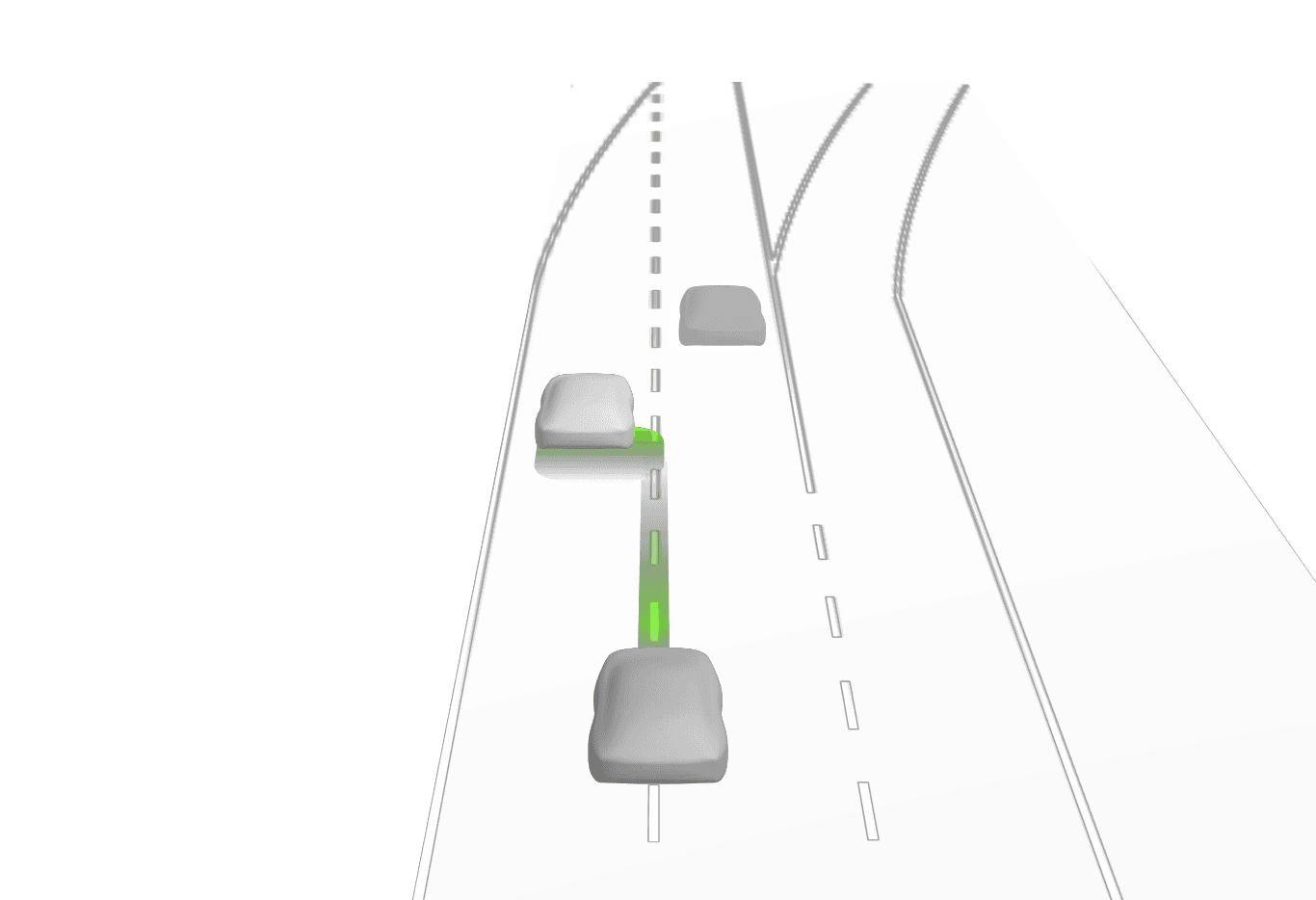
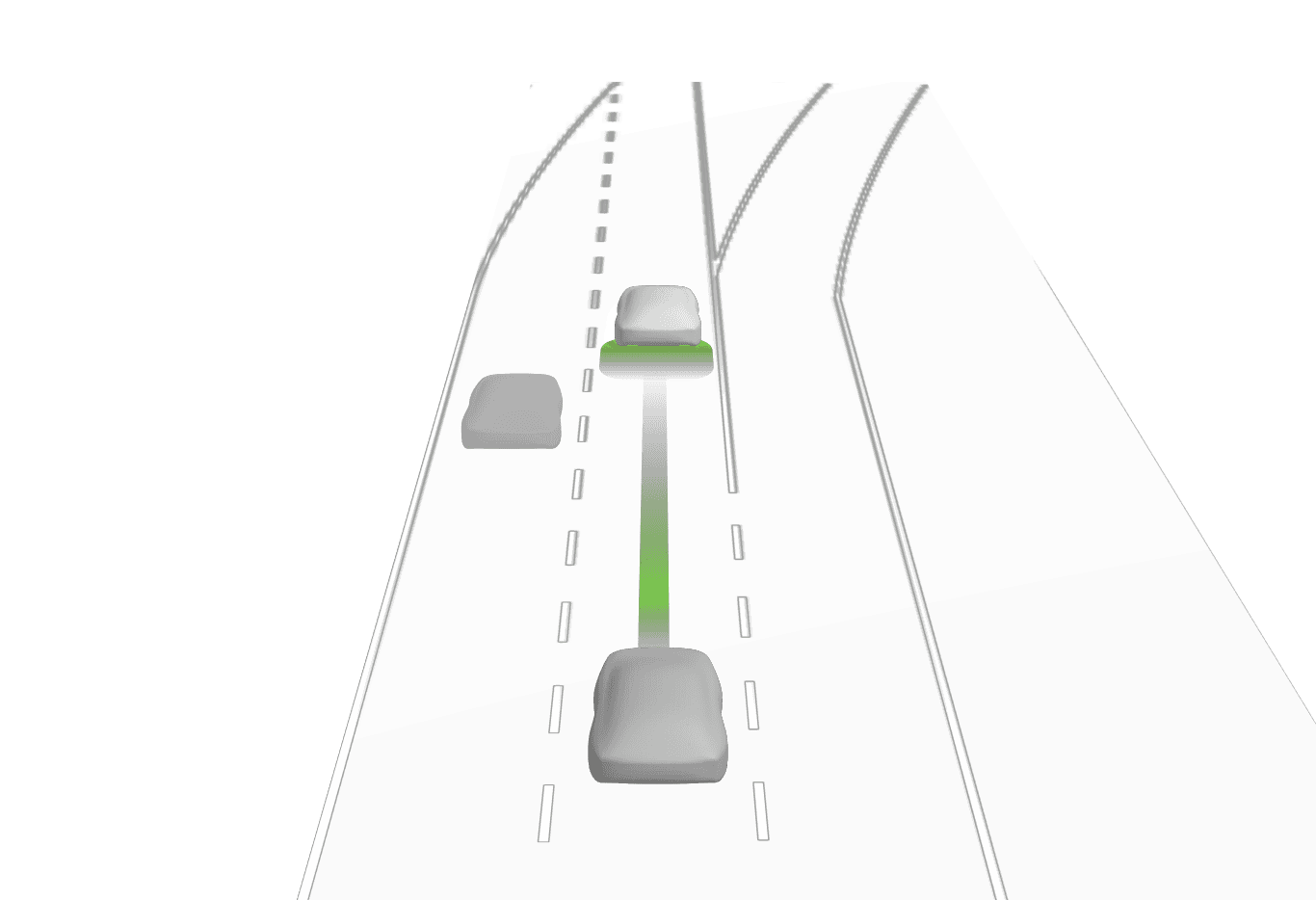
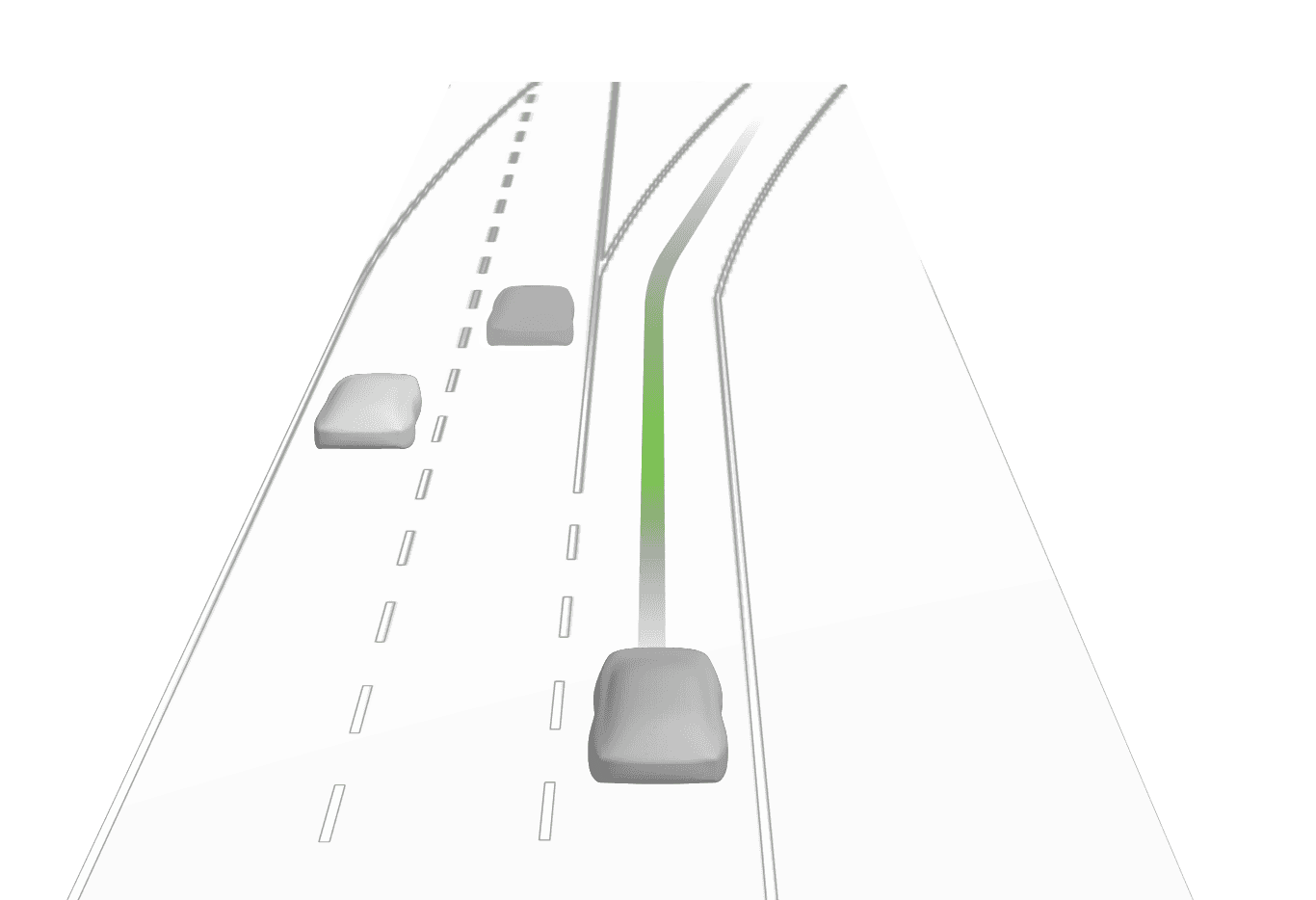
Distance Bar (Dynamic Width):
The width of the bar acts as a physical metaphor for proximity. As the lead vehicle gets closer, the bar grows wider to create a sense of presence; vice versa.
Lateral Indicator (Relative Positioning):
This indicator tracks the front car's lateral offset relative to your own vehicle's planned trajectory. Providing an visual explanation for speed adjustment or steering.
Green (Steady State):
The default Comfort Zone when the lead vehicle maintains a constant distance or when the L4 system can adjust speed via coasting.

Orange (Active Intervention):
The "Awareness Zone." The bar shifts to orange when the system actively applies the brakes to maintain safety margins.

Red (Critical/Terminal):
The Action Zone. The bar spans to full width and flashes to indicate AEB or a MRM.

System Feedback & User Agency
The Dialogue of Intent
L4 autonomy isn't a total handover of control; it is a shared partnership between the human and the machine.

System-led passive awareness
"I'm doing it"
For routine, system-planned maneuvers, the interface remains in Ambient Standby. Only the Smart Notch provides subtle visual feedback of the car's physical intent
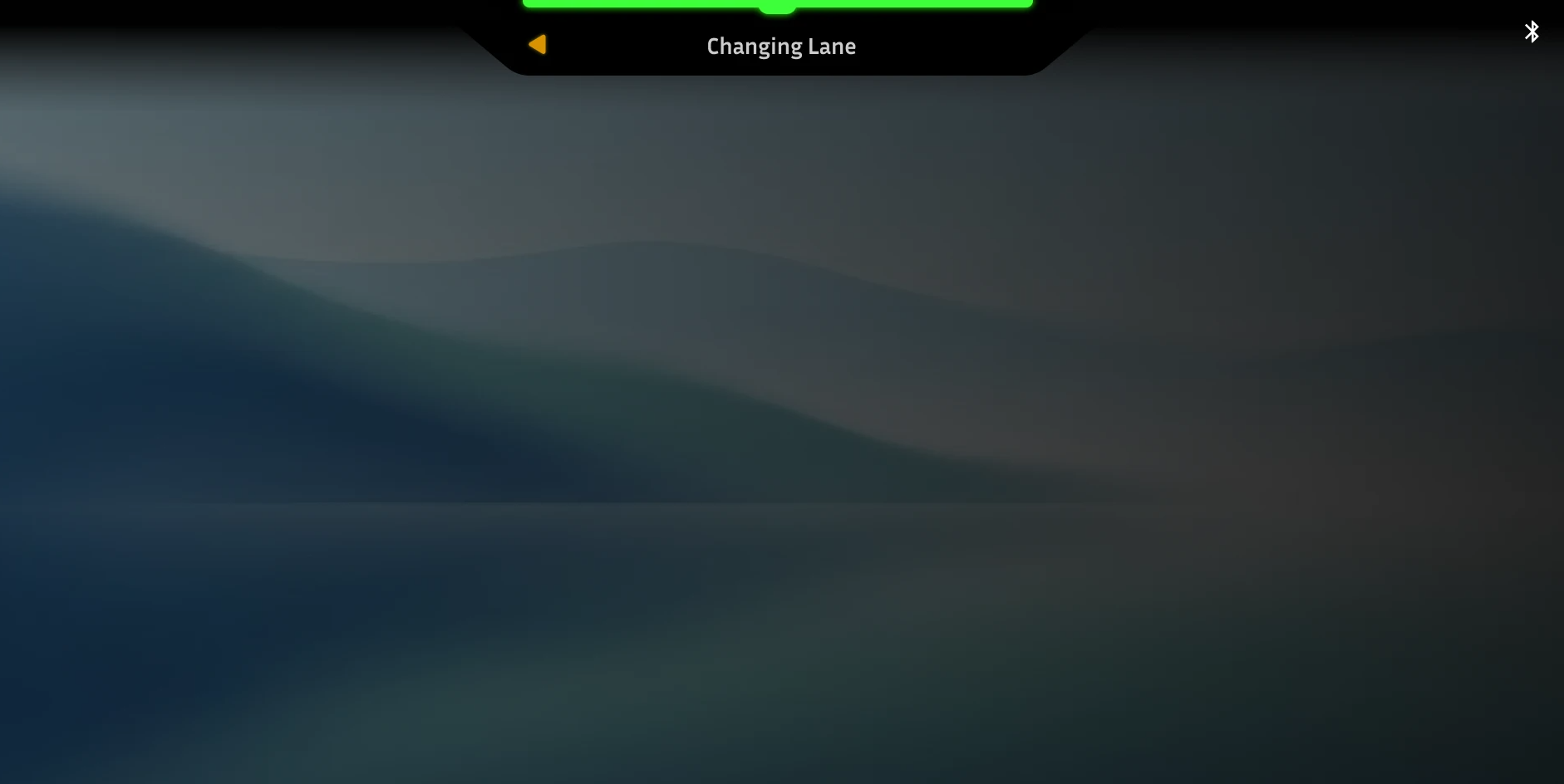
User-nudged intent confirmation
'I got it'
When a user initiates a minor input—such as blinking the lights—the Road UI instantly surfaces. This provides a transparent "handshake" between the human and the AI.
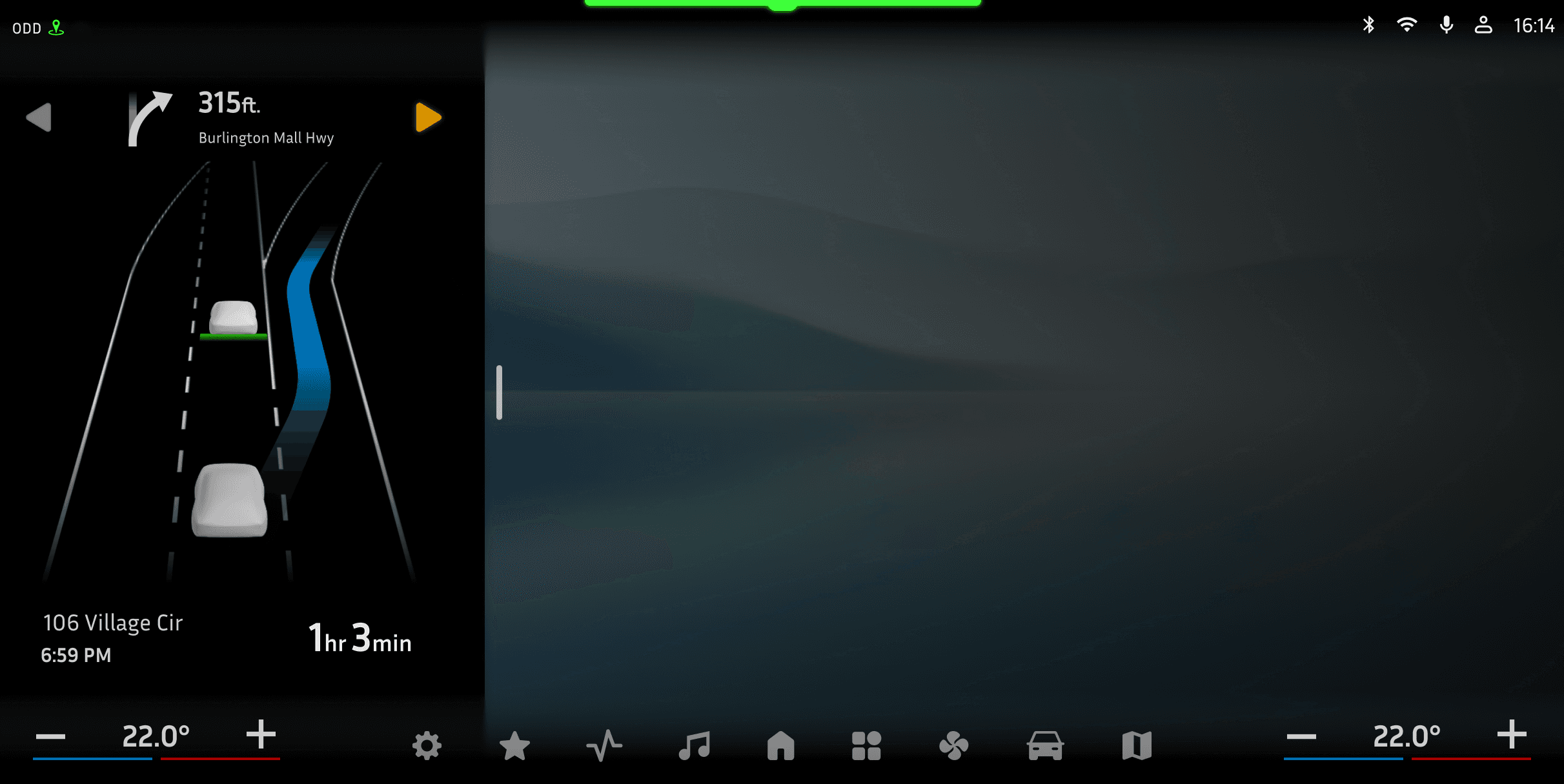
User-manual active handover
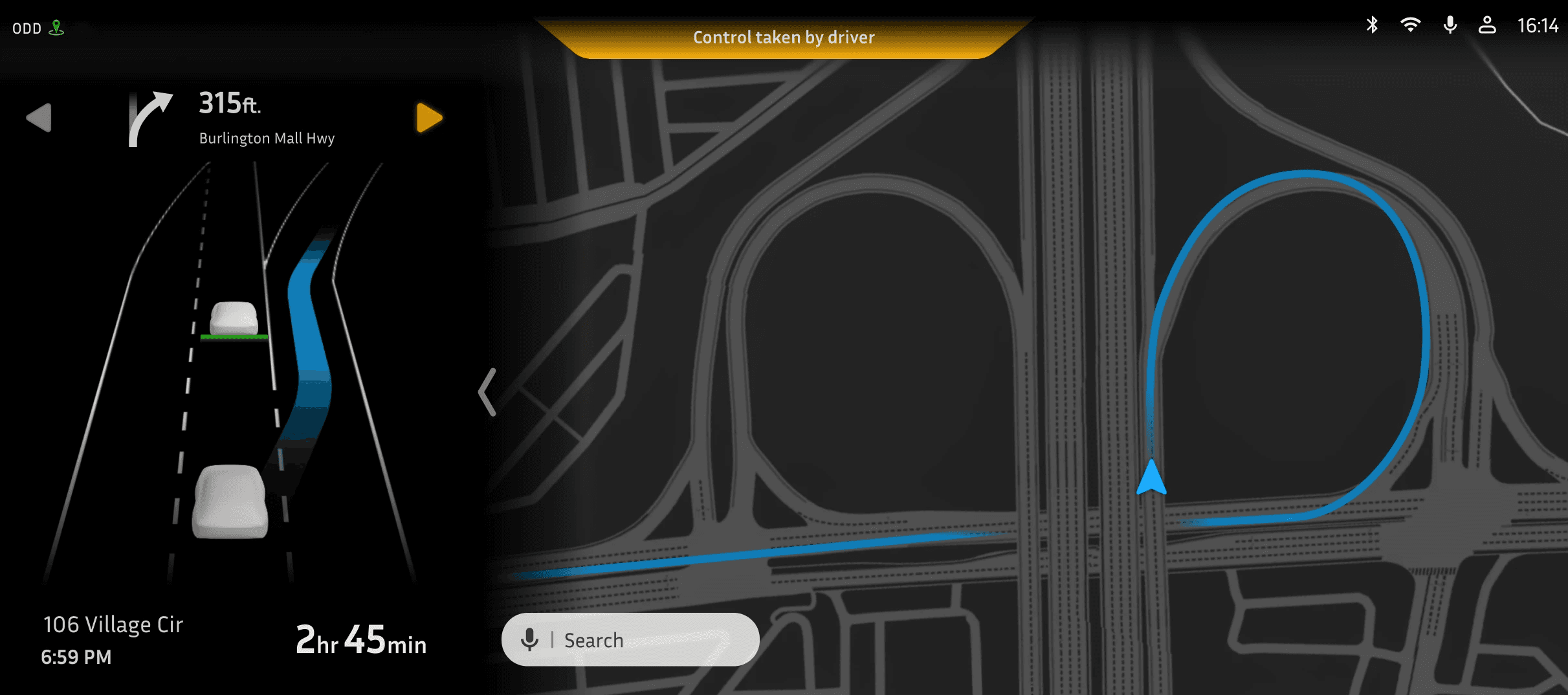
'Control is yours'
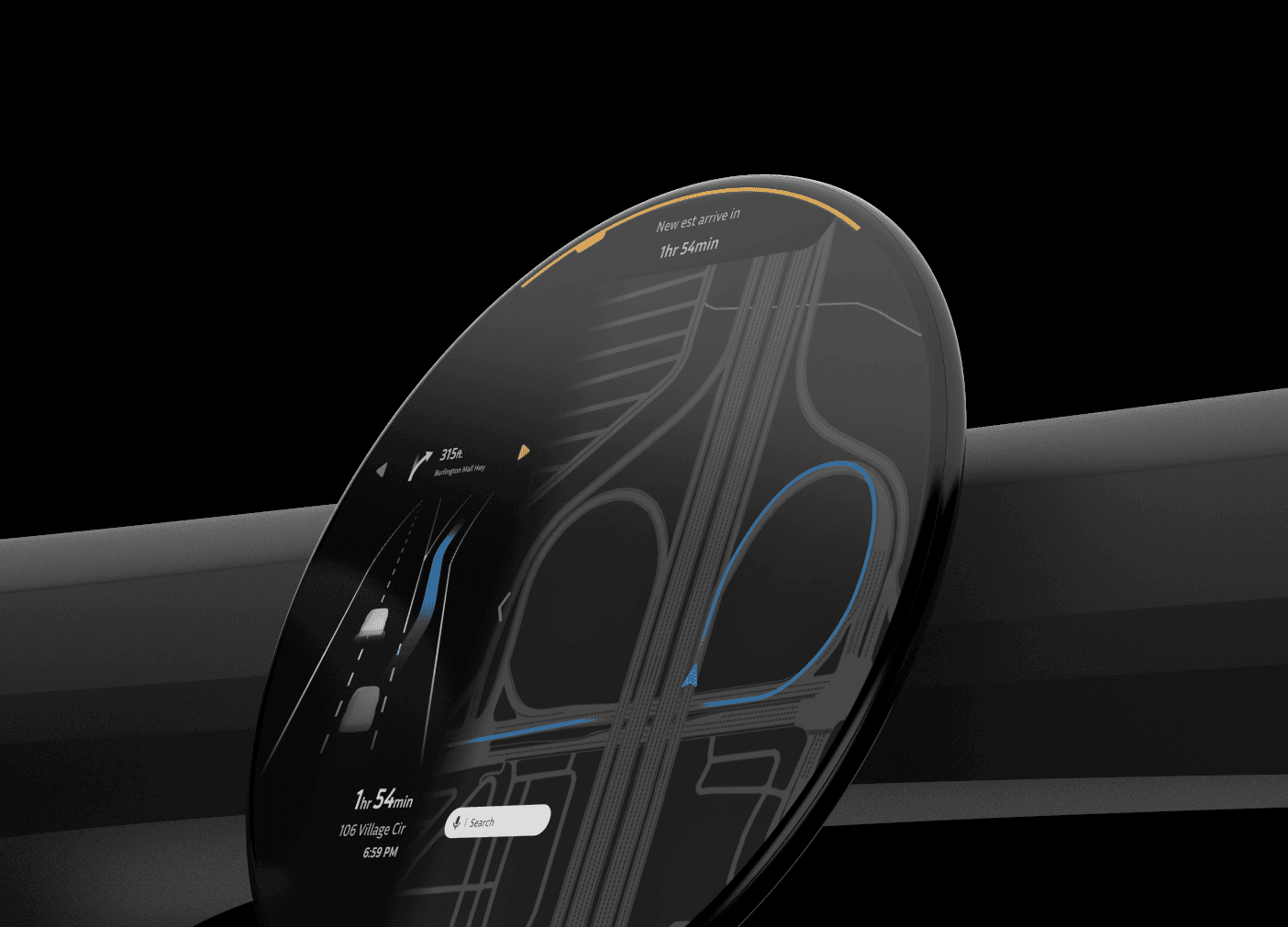
If the user directly intervenes via the steering wheel, the system instantly pauses all secondary activities (video/gaming). The UI expands into a high-density Road + Map layout, prioritizing tactical data to ensure a safe and immediate transition from passenger back to supervisor.
Trigger type
System dialogue
UI response
Notch behavior
User ongoing activity
System planned
"I'm doing it"
N/A (Ambient standby)
Visual pulse
Uninterrupted
User-nudged
"I got it"
Road UI surfaces
State confirmation
Dependent
User-manual
"Control is yours"
Full road + map layout
State confirmation
Auto paused
By varying the visual response of the Smart Notch and Road UI, the system clarifies who is initiating a maneuver and confirms that every user nudge is understood and validated.
ODD Boundaries & The Handover Protocol
The Safety Horizon
An L4 system is defined by how it handles its own limits. As the vehicle approaches the edge of its Operational Design Domain (ODD), the UI shifts from an ambient partner to a tactical guide.

Alert Notch
A high-contrast yellow pulse designed to immediately draw attention to incoming strategic info.

ODD Status Icon
Communicate the car’s proximity to L4 operational limits.
Takeover Target
A waypoint anchors where the handover will occur.

Tactical Warnings
Urgent alerts that dominate the UI to communicate critical takeover windows or emergency stops.
Universal Scalability
The L4 Trust Architecture isn't limited to a single vehicle dashboard; it is a scalable logic for the future of automated environments. By prioritizing spatial mapping over pixel density, the system maintains its "Dialogue of Intent" regardless of the hardware.